Building a Design Organization That Scales
Evolving a product design team into a multidisciplinary experience function—and building the operating model, leadership, and career infrastructure to sustain it.
Role
UX Director
Timeline
2025–2026
Outcome
A unified design organization with clear disciplines, career paths, and governance.
The starting point
Design had strong practitioners embedded in product teams, but the function itself wasn't designed to scale.
Research was inconsistent. The design system was aging. Career growth lacked a shared structure. Brand and communication design lived outside the product design practice. And as the scope of experience work expanded, there wasn't yet an operating model connecting people, practice, and delivery.
The opportunity wasn't simply to grow the team. It was to build a multidisciplinary design function capable of shaping the experience across the customer lifecycle.
The team needed more than resources. It needed an operating system.
Expanding the role of Design
We evolved the function beyond product design into a broader Experience Design practice spanning:
Product Design · Research · Communication Design · Brand · Innovation · Design Systems · Experience Strategy
This brought disciplines that influence the customer experience closer together while creating clearer leadership and ownership within each practice.
The shift changed Design's role from supporting individual product initiatives to helping shape experience direction across products, journeys, and touchpoints.
Building an operating model for Design
A broader mandate required a clearer way of working.
We created a model connecting product roadmaps, design intake, discovery, design development, and engineering delivery—giving designers space to understand and shape problems before work entered development.
The goal wasn't more process. It was to create enough structure for Design to work ahead, maintain quality, and influence decisions before they became implementation commitments.
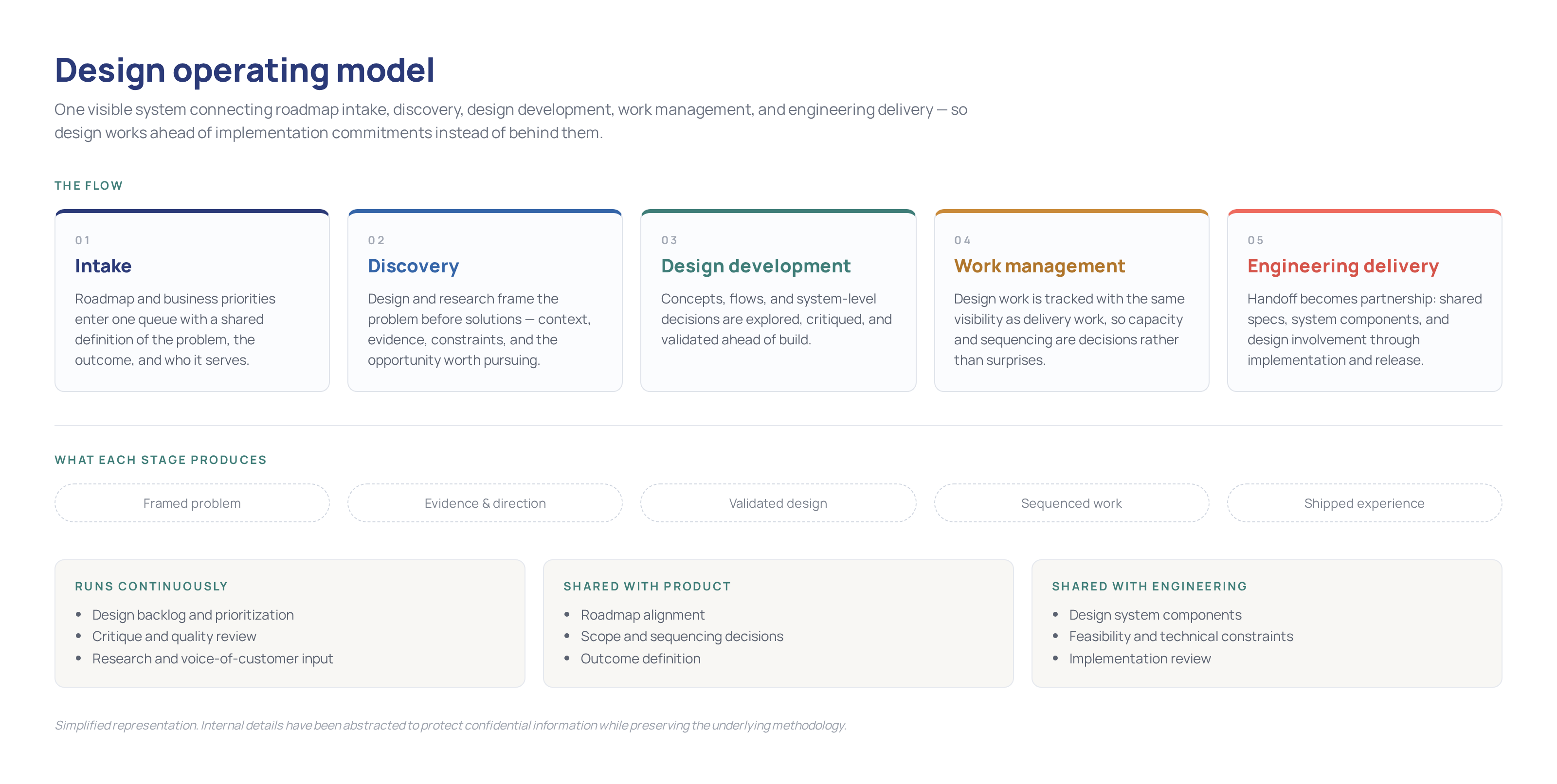
Design moved upstream—from receiving work to helping shape the work worth doing.
Making growth intentional
Scaling the function also meant creating a clearer definition of what growth looked like.
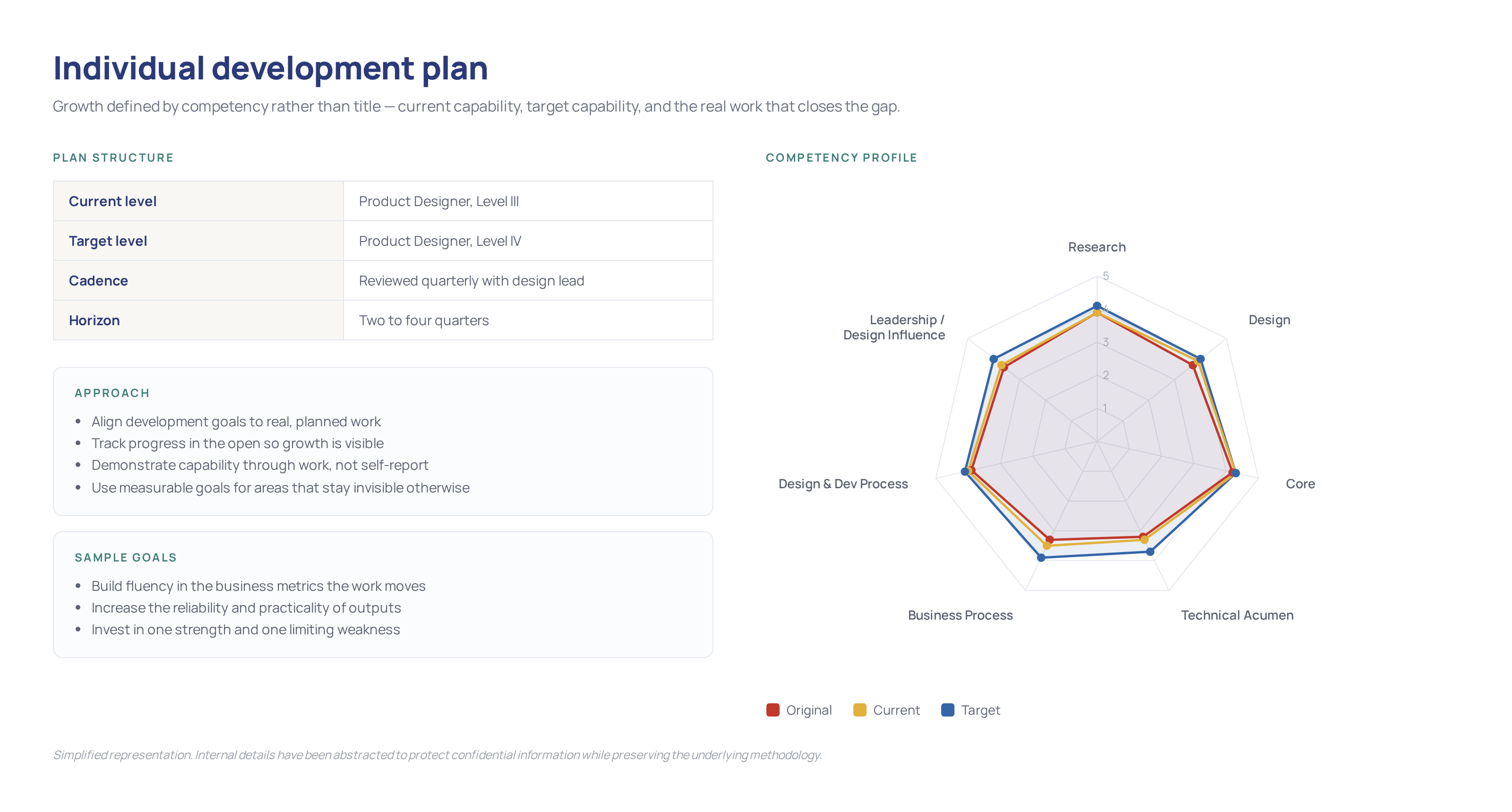
Rather than treating advancement as a title change or forcing senior practitioners toward management, we created competency-based development across areas such as research, craft, business acumen, technical understanding, process, and design influence.
Individual development plans connect current capability, target capability, real work, and evidence of growth—turning career development into an ongoing practice rather than an annual conversation.
Turning the framework into evidence
The framework goes deeper than self-assessment. Each competency connects development goals to specific actions, active work, and evidence, allowing designers and leads to see where growth is actually happening.
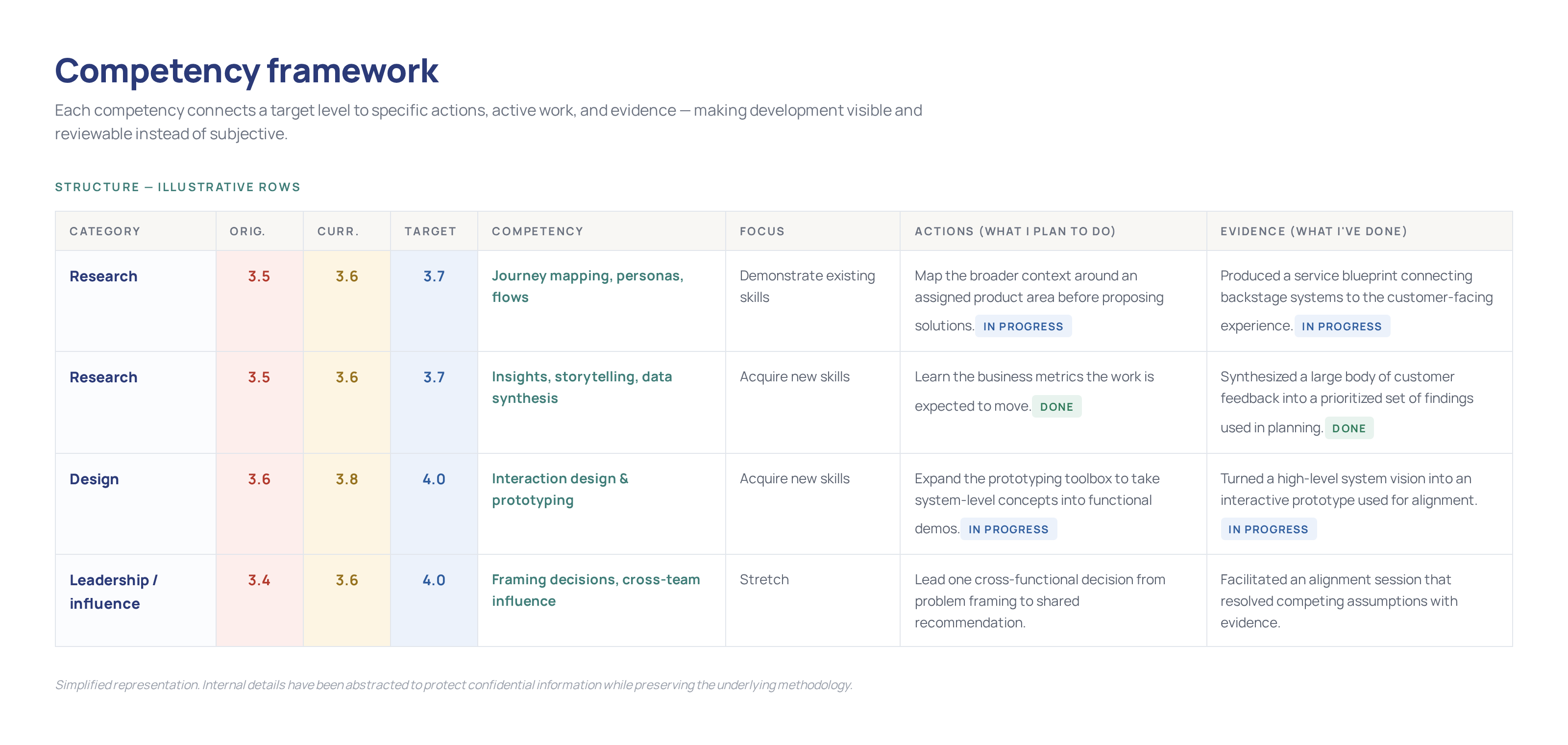
Career growth became something designers could actively design—not something they waited to be given.
Creating leadership at more than one level
As the team expanded, I established design leadership closer to the work rather than making every decision flow through one person.
Leads gained responsibility for developing people, raising craft quality, shaping experience decisions, and challenging the status quo within their areas.
That created more leadership capacity across the function while giving senior designers meaningful ways to grow their influence—with distinct paths for craft, strategy, and people leadership.
The goal wasn't to create more hierarchy. It was to create more leaders.
Giving the practice a shared point of view
Structure alone doesn't create a strong design culture.
We defined a shared identity and set of guiding principles for how the team approaches its work—from designing for behavior change and balancing user and business value to reducing complexity, using evidence, and learning through iteration.
The principles created a common standard without requiring every designer to approach a problem the same way.
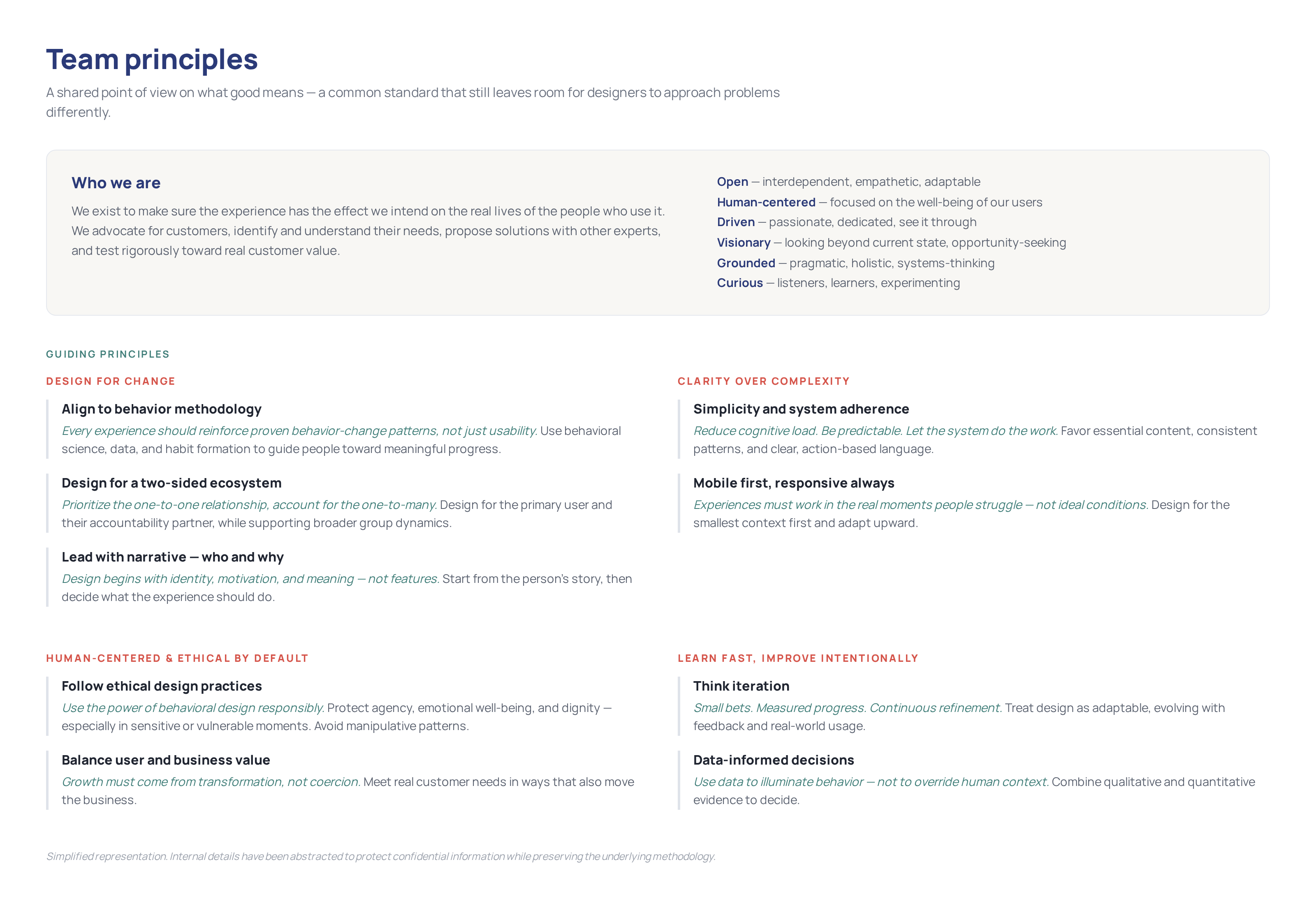
A strong design culture isn't everyone designing the same way. It's everyone understanding what good means.
Strengthening the practice
As the organization matured, we also rebuilt the infrastructure designers relied on to do their best work.
- Design Systems — moved away from an aging bespoke system toward a themeable foundation built for greater consistency between design and code (case study 05).
- Research — expanded from isolated studies toward an ongoing practice supported by VoC, shared research infrastructure, and closer integration with product decision-making (case study 04).
- AI-enabled workflows — introduced AI across exploration, prototyping, synthesis, and communication—not as a replacement for craft, but as leverage that gives designers more time for higher-value thinking.
The result wasn't simply a larger design team. It was a function with clearer purpose, stronger leadership, intentional career growth, shared ways of working, and the infrastructure to influence the experience at a much broader level.
Next use case
Turning Customer Voice Into Intelligence