Building a Digital and CX Strategy
Sequencing experience investment, then building the operating model to deliver it.
Mid-size commercial insurer
Role
VP of UX
Timeline
2021–2024
Outcome
~$5M a year in savings, with a funded, sequenced roadmap and named experience owners.
The business problem
The company had traditionally relied on internally oriented solutions and human relationships to deliver quality service. As customer expectations evolved, those methods were neither scalable nor profitable — and with no UX resources or user-centered mentality, digital ambition outpaced digital capability. Everything was urgent, nothing was sequenced, and no one owned an experience end to end.
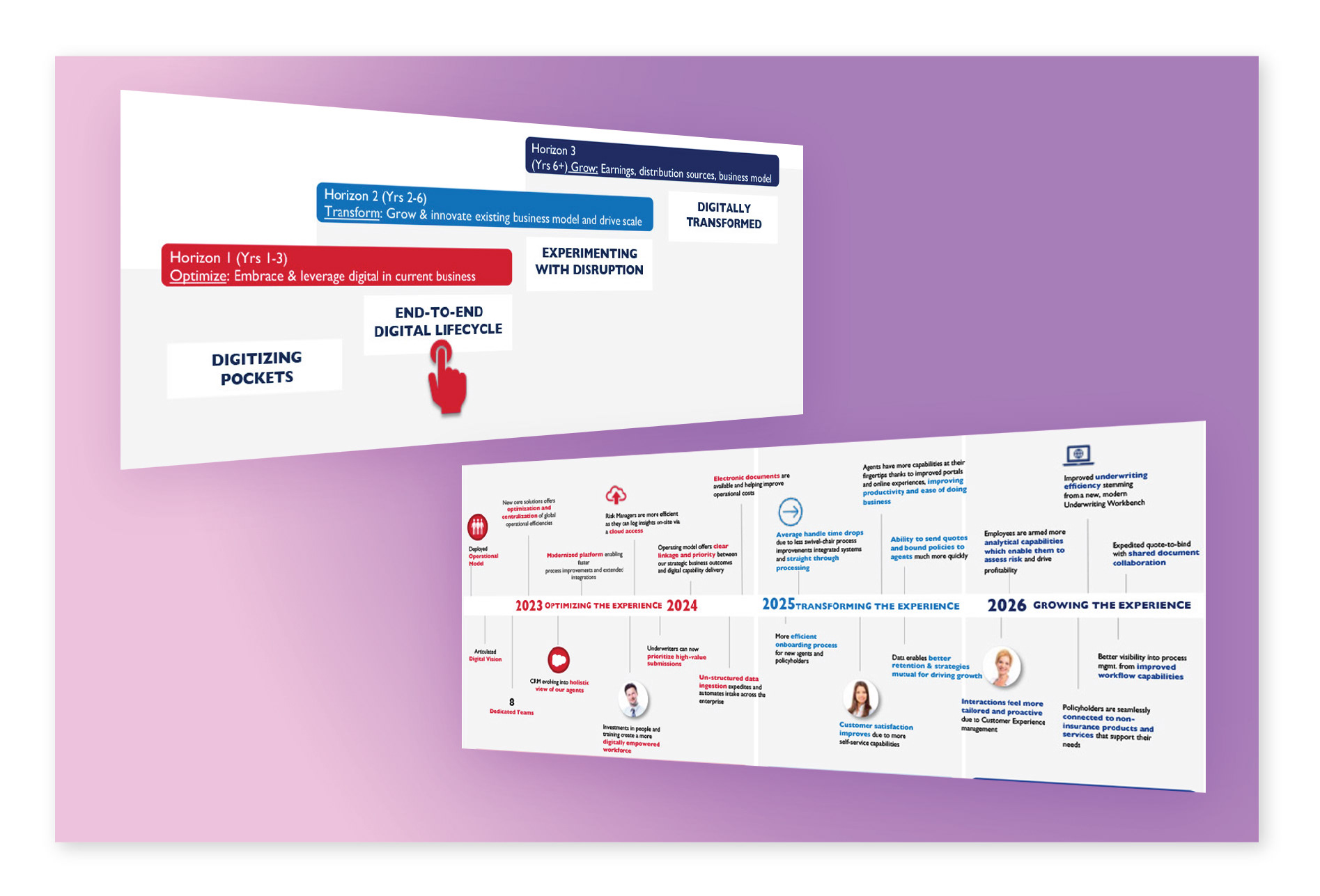
Horizon-based strategy
Framed the work in three horizons so the organization could act now without mortgaging later: fix the friction that costs money today, build the capabilities that unlock self-service and automation next, and position for differentiated, data-driven experiences after that. Each horizon carried its own success measures, so progress was visible before the final horizon landed.
The CX framework
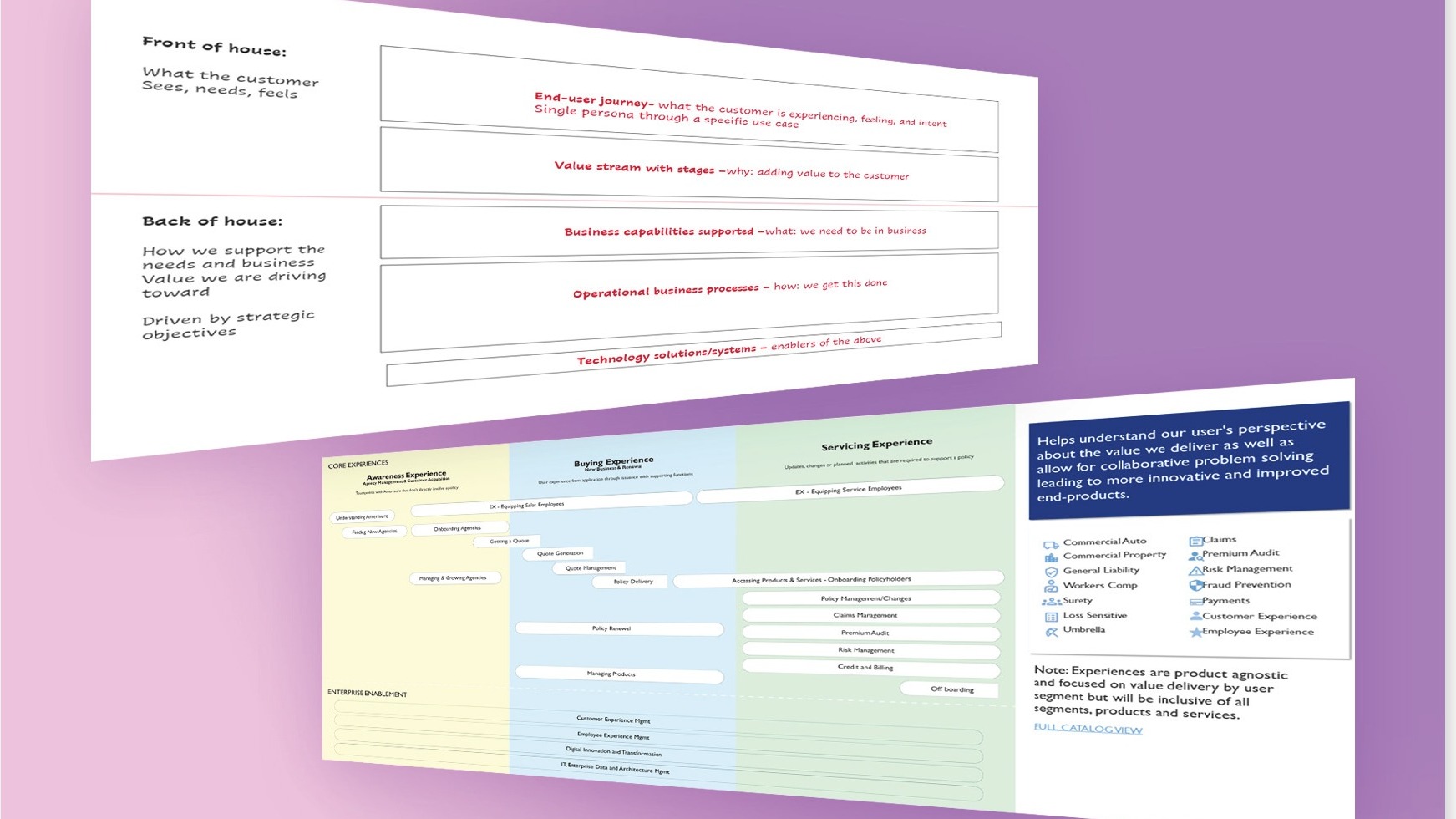
The framework tied customer value to the capabilities that produce it, rather than to the screens that display it.
- Verticals for brand, buy, service, and renew — each with defined moments of truth
- Value propositions stated in customer language, then mapped to business capability
- Named experience owners in the business, accountable for outcomes not deliverables
- Measures per vertical: SUS, NPS, effort, and cycle time
Standing up the practice
Strategy only holds if delivery can absorb it. I paired the strategy with an operating model and a design system so the practice could hold once the strategy was accepted.
- Phased rollout of the user-centered strategy, grounded in industry and user research
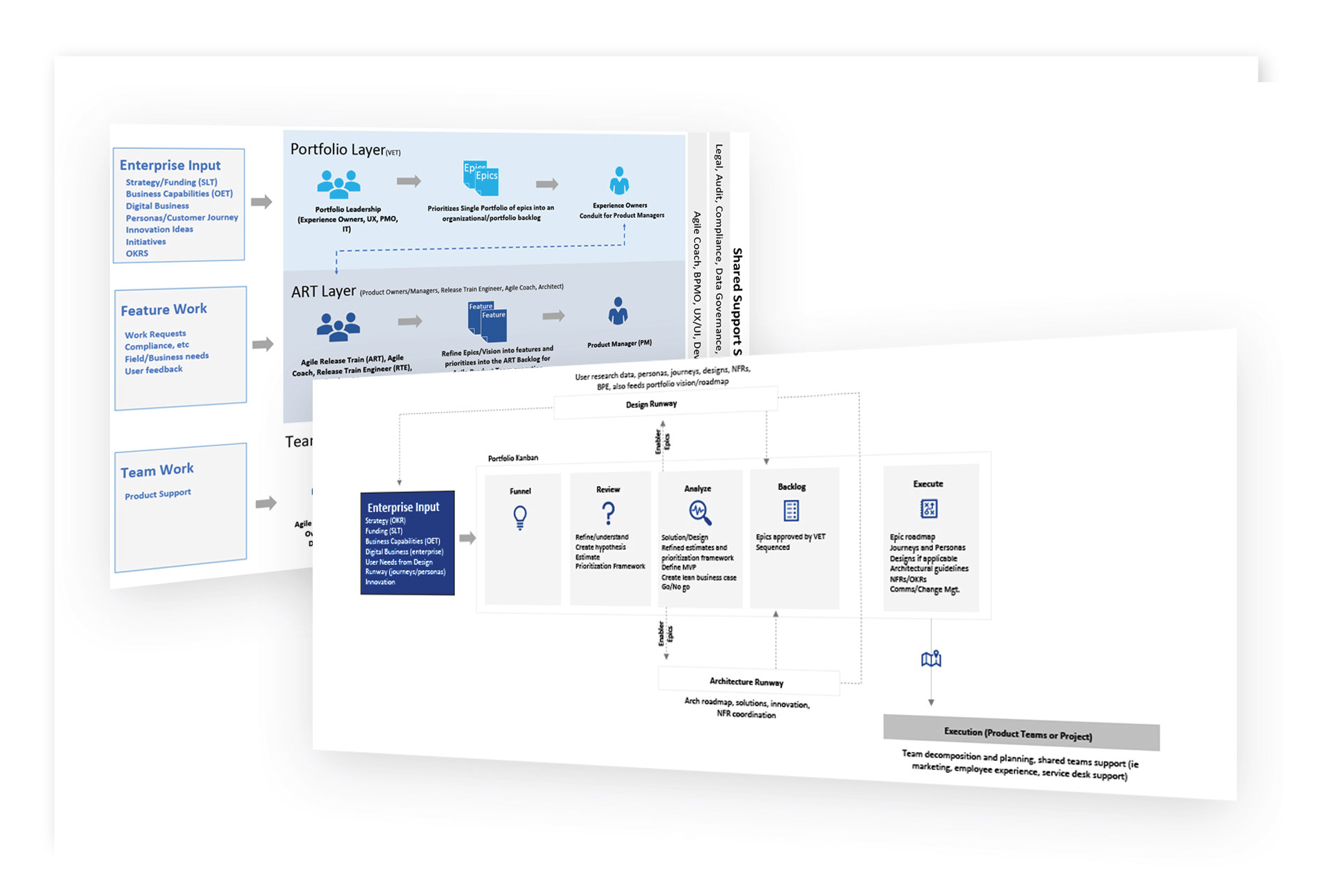
- Portfolio-first approach to problem validation
- Kanban-based design ops with a discovery runway kept ahead of engineering
- Experience decomposition with business owners, so the business owned its decisions
- UX services and guidance that scaled with the organization
Results
The combination of strategy, ops, and system changed both economics and behavior.
- ~$5M a year in savings through improved time to market and cycle time
- Experience investment sequenced across three horizons instead of negotiated per project
- Business owners accountable for experience outcomes
- Improved ROI and OKR alignment for product improvements
- Working feedback loops into product delivery
- Personas, journeys, and design thinking adopted across teams
Next use case
Modernizing a Legacy Radio Playout Platform
Selected artifacts